Scroll to watch her answer it Skip to the answer

Your use case
is a question.

Eunice answers it.

No app to build. Ask in your own words, and Eunice pulls the data, does the analysis, and hands back the finished map, report, or spreadsheet, with its sources.

Eunice works out what the question needs and does each step herself: 19 steps, 2 minutes 13 seconds.

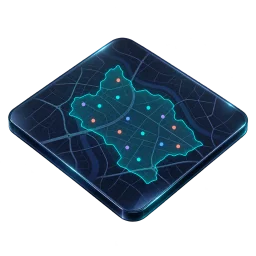
She models the release forward two hours on the forecast wind at the time of the run. Each point of light is the center of one modeled puff, and every puff spreads as it travels.

Then she draws the screening area, everywhere those puffs could reach, drawn wide on purpose, and finds every school, hospital, childcare center, and nursing home on record inside it.

And she says what the numbers are, and what they are not.

Hypothetical release. Modeled screening estimate. No release rate was given, so Eunice assumed 10 kg/s and said so. Counted inside the screening area, which allows for each puff's full spread: facilities that could be reached, not confirmed exposures. Facility locations: HIFLD, dated records 2010 to 2024. Run October 20, 2026.

"A tank at 5600 Douglas St, New Orleans is venting formaldehyde. Which schools, hospitals, childcare centers, and nursing homes are in the path over the next two hours?"

  1. ✓Looked up formaldehyde and its hazard properties
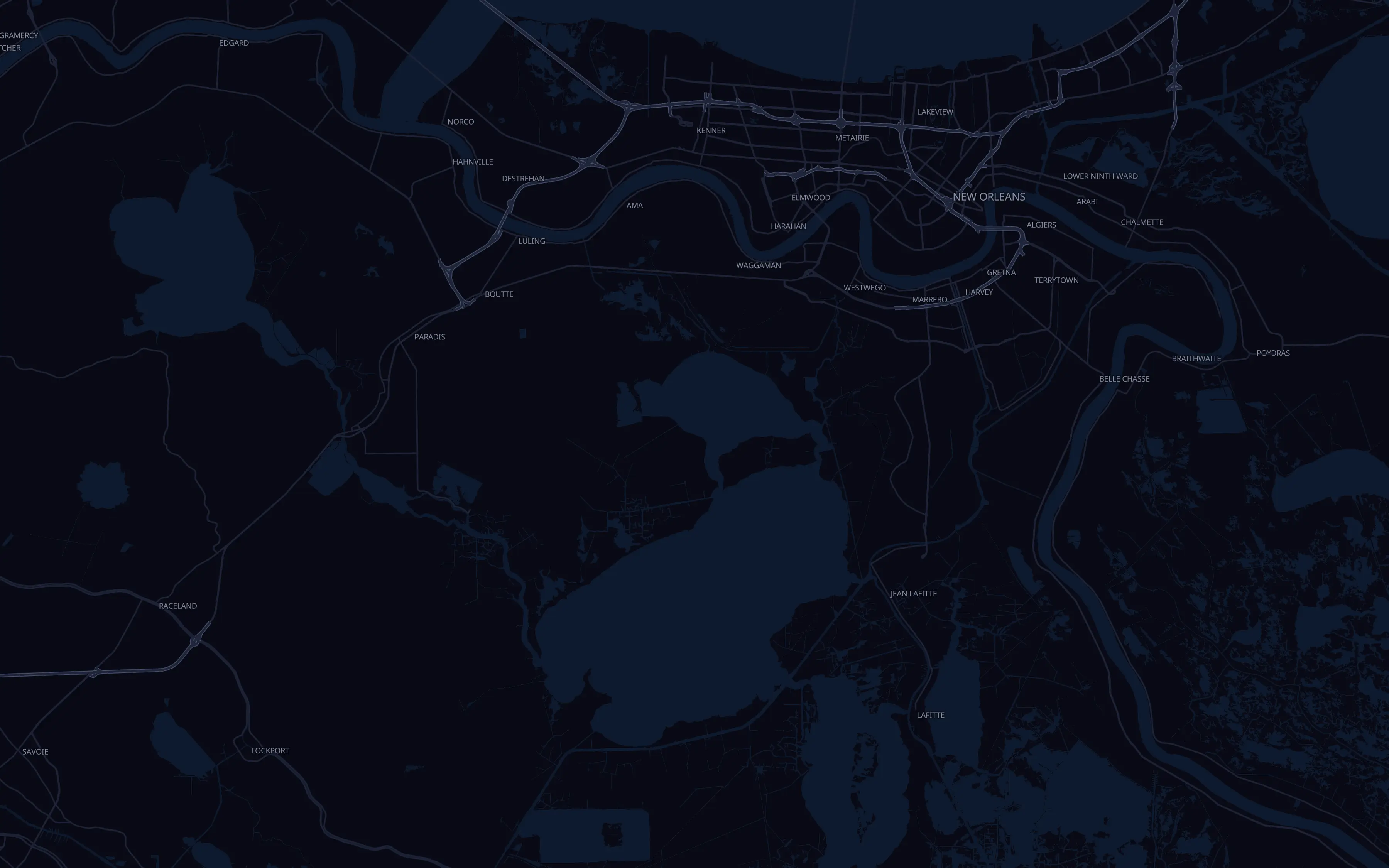
  2. ✓Found 5600 Douglas St on the map
  3. ✓Searched the catalog for schools, hospitals, childcare and nursing homes
  4. ✓Modeled a two hour release on the forecast wind at the time
  5. ✓Found the facilities inside the screening area, across four public layers
  6. ✓Counted them by type and put them on the map
  • 136 Childcare centers
  • 91 Public schools
  • 30 Nursing homes
  • 15 Hospitals

Hypothetical release. Modeled screening estimate. No release rate was given, so Eunice assumed 10 kg/s and said so. Counted inside the screening area, which allows for each puff's full spread: facilities that could be reached, not confirmed exposures.

Facility locations: HIFLD, dated records 2010 to 2024. Run October 20, 2026.

Bring us a use case Watch an earlier run

An answer you can check.

The record of the same run, as it was kept.

  • Sources attached to every answer

    Answers from your document library carry the exact source passages they came from, so an answer is something you can check rather than take on faith.

  • A person confirms outbound actions

    Sending email or changing a ticket asks first. Merging records across systems waits for an authenticated approver in an approvals ledger, with two approvers for higher tiers.

  • Every step on the record

    Every message, tool call, input, output, and cost is recorded without truncation, and any conversation can be replayed.

Conversation c9f4b59a
19 steps, 2 minutes 13 seconds
  1. +0:11 lookup_chemical Looked up formaldehyde (CAS 50-00-0) and its hazard properties
  2. +0:12 geocode Geocoded 5600 Douglas St, New Orleans to 29.955176, -90.017687
  3. +0:12 search_catalog Searched the data catalog for schools, hospitals, childcare and nursing homes in New Orleans
  4. +0:12 search_tools Searched her tools for finding sensitive receptors inside a plume hazard zone
  5. +0:23 simulate_dispersion Simulated a 2 hour continuous formaldehyde release on HRRR forecast winds (44,264 particle rows)
  6. +1:22 search_catalog Searched the data catalog for the HIFLD public schools layer
  7. +1:29 features_in_region Found the facilities inside the 2 hour plume footprint across four HIFLD layers (272)
  8. +1:38 to
    +1:52
    query ×4, spatial_filter ×3 Compared the facilities with the three AEGL zones, which the run flagged as beyond the model's range; it said the counts are not proof of any AEGL level
  9. +2:02 query Counted facilities in the path by type
  10. +2:03 query Built the full facility roster
  11. +2:03 display_map Put the path and the 272 facilities on the map, colored by type
  12. +2:10 present_rows Showed the count table
  13. +2:10 present_rows Showed the facility roster (272 rows)
Sources
four HIFLD layers from the catalog, named in the answer
Outbound actions
none; nothing was sent or changed
Recorded
all 19 steps, with inputs and outputs, replayable

In the run's own words: "plume footprint" is the screening area above, and "particle rows" are the modeled puffs.

Why does a one-second answer
take three weeks? It doesn't have to.

Day 1Day 2Day 9Day 16Day 21

You have a question about your own data.

It becomes a ticket.

It waits in a queue.

An expert pulls the data.

The answer comes back in their terms. Often, it goes around again.

With Eunice you ask directly, and the answer comes back in your terms, with its sources. Your expert reviews it instead of fetching it.

Eunice does not add expertise to your organization. She stops rationing the expertise you already have.

Watch her work.

01 Ask

One question, answered on the record.

A chemical release, asked in plain language. She screens the facilities in its path, then audits her own run, including what she could not do.

02 Catalog

Every dataset, registered once.

Uploads, documents, exports, and connected sources, each with its lineage and its history of use, grouped into kits.

03 Procedures

Save a procedure, run it by name.

A repeatable review written once in readable prose, with the steps it requires and the inputs it needs, kept in versions.

04 Replay

Replay any conversation.

Every message, tool call, input, output, and cost, recorded without truncation and open to inspection.

05 Spend

See what the AI cost.

Every model call metered and attributed, with spend over time and by module, so spend is visible before the invoice arrives.

Built to be checked.

01 / 03

One conversation reaches all of it.

Documents, public data, spatial data, ticketing systems, models, and the reports at the end are all within reach of a single conversation. Each capability is a tool the assistant can call, so new ones arrive without new screens.

02 / 03

Verifiable by construction.

Sources, approvals, and costs are recorded as ordinary data, not as an afterthought. The record is complete enough to replay any conversation and see exactly what was done and why.

03 / 03

Proven where the rules are strict.

Eunice was built first for regulated operations, where an answer without a citation is not an answer. The governance is real because it had to be.

Everything is a tool.

A document search, a spatial join, a chart, a risk model, a spreadsheet export: each is a tool with a declared input and output, and the assistant chooses which to use and in what order. There is no fixed pipeline and no separate application for each kind of work.

  • You describe the outcome.
    Eunice decides which tools apply, runs them, and shows you each step it took.
  • Results stay connected.
    A table produced by one tool can be mapped, charted, modeled, or exported by the next.
  • Procedures become capabilities.
    Capture a repeatable procedure once, in readable prose, and invoke it by name next time.

Nothing happens
off the record.

Most platforms produce an answer. Eunice also produces the evidence: what was asked, what was called, what came back, what it cost, and where every dataset came from.

One catalog for every dataset.

Every upload, derived table, document, and export is registered once, with its lineage, duplicate detection, and grouping into Kits. An analyst finds what already exists instead of pulling it again.

Replay any conversation.

Every message, tool call, input, output, and cost is recorded without truncation. Any conversation can be replayed, filtered, or exported as a report.

Bring the question you
cannot answer today.

Ask Eunice, then check her work.